


Glass clamps or U-channel? How to fix the fixed panel
Every frameless shower has at least one piece of glass that does not move, and how you hold that fixed panel decides more about the finished job than the door hardware does. You have two real options: glass clamps or U-channel. Both work. Neither is right for every bathroom, and picking the wrong one shows up as a callback.
The two systems
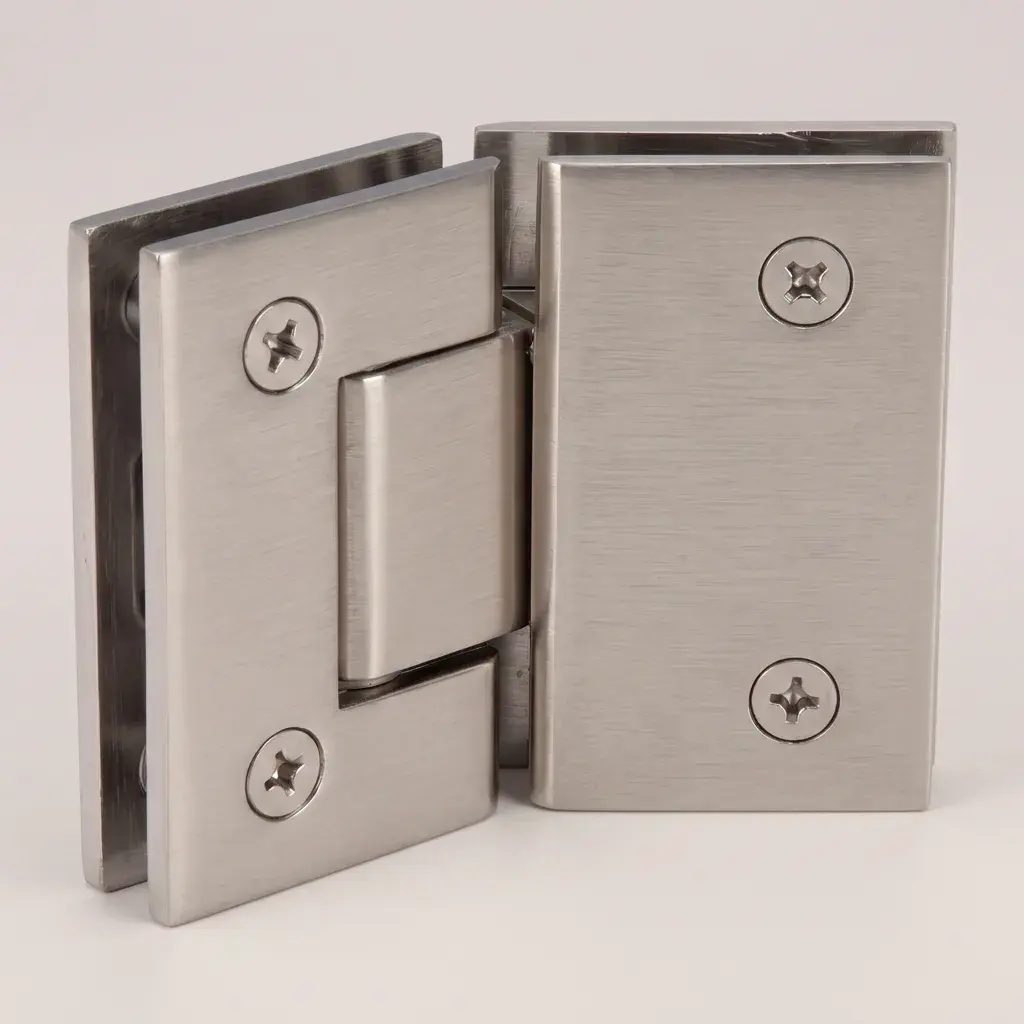
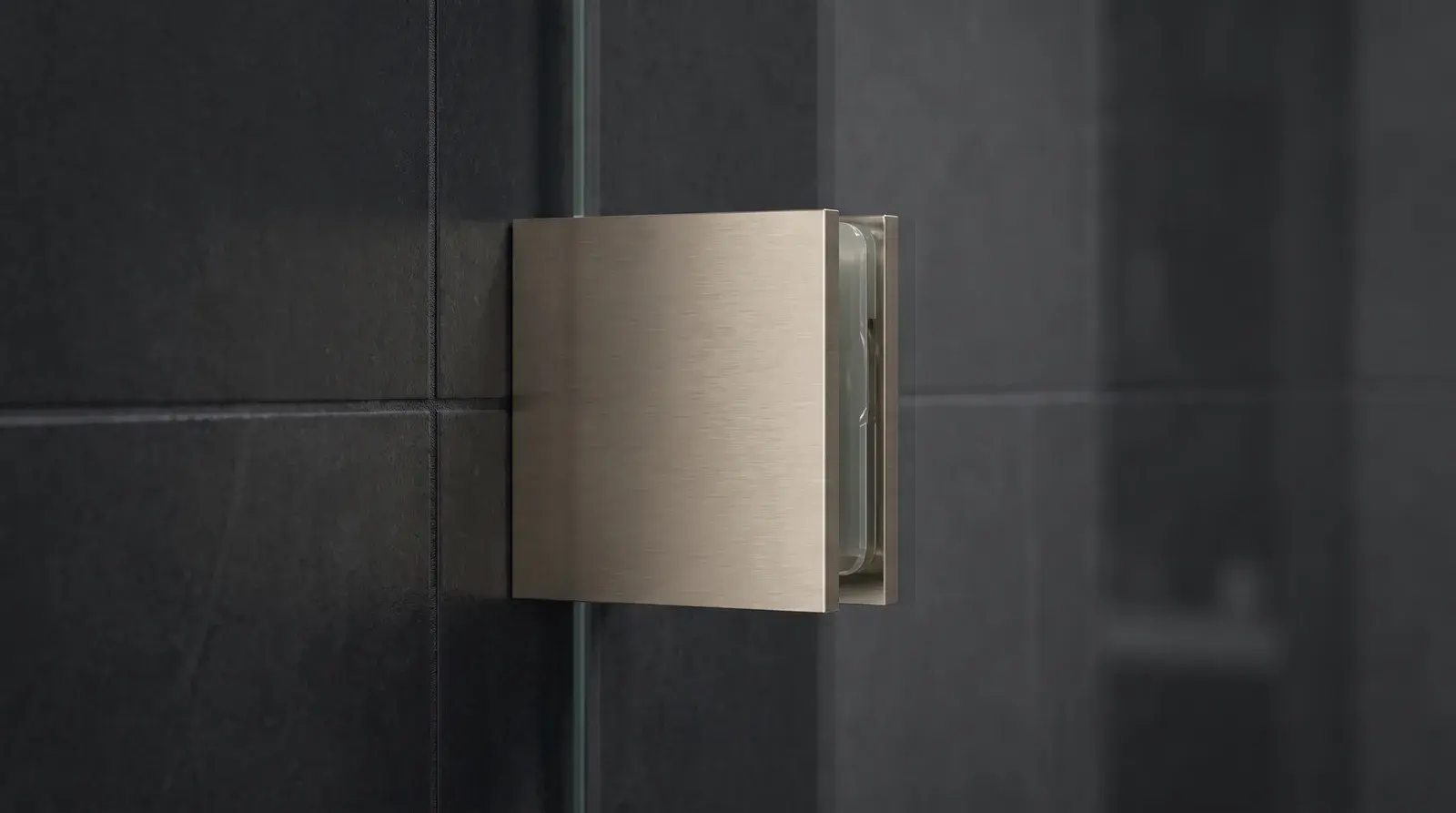
Glass clamps are small metal blocks, usually 2 in. by 2 in., that bolt to the wall or curb and pinch the glass between two gasketed plates. Two or three hold a typical fixed panel. The glass is notched where each clamp sits so the clamp body sits flush against the substrate. Glass-to-glass versions at 90, 135 and 180 degrees do the same job between two panels. Browse the range at glass clamps.
U-channel is an extruded aluminum trough, sold in 96 in. lengths and sized for 3/8 in. or 1/2 in. glass, that screws to the wall and curb. The glass drops in, gets shimmed and set with silicone, and the channel runs the full edge. Deep channel and header channel are the same idea with more bite for tall or wide panels. See shower U-channels.
Look
Clamps win this one. Two small squares of brushed stainless or matte black against tile reads as high-end frameless. Channel adds a continuous metal line along the wall and curb. In a satin finish on light tile it mostly disappears. In black on white marble it becomes part of the design, which is fine if the client asked for it and a problem if they did not.
Water management
Channel is a dam. Water running down the panel hits the bottom channel and drains back into the shower. Bed it in silicone and seal the outside edge and you have a continuous barrier along the curb.
Clamps hold the glass off the curb on gaskets and leave the glass edge exposed between them. That edge needs a continuous silicone bead on the inside face, and usually the outside too, or water tracks under the glass onto the bathroom floor. Done fast, it leaks within a month. The base bead on a clamped panel is the most common failure point we hear about.
Out-of-plumb walls and tile tolerance
This is where channel earns its keep. Glass is cut square. Walls and tile are not. A wall out of plumb 1/4 in. over 72 in. is normal on a remodel.
Channel hides it. The glass sits inside the trough, you shim to plumb, silicone fills the gap, and nobody sees the wedge. Clamps hide nothing. The clamp face sits flat on the tile, so the glass follows the wall, or you shim behind the clamp and end up with a visible gap under one plate. Put a 6 ft. level on the wall before you quote clamps.
Glass fabrication
Clamps need notches. Each wall clamp needs a cutout at the glass edge, and glass-to-glass clamps need matching notches on both panels. Notches add fabrication cost and lead time, and add one more dimension that has to be right. If a clamp lands on a grout line you did not plan for, the panel is scrap.
Channel takes plain rectangles. No cutouts, no notch layout, and a panel a few sixteenths short is still fine because the channel covers the edge. On a tight lead time, channel is the safer order.
Install time
Channel is faster on the day. Level it, screw it, drop the glass, shim, silicone, done. Clamps take more layout, more drilling into tile, and more care lining up notch and clamp body. Over a full shower the difference is about an hour.
Cost
Hardware cost is close. A pair of quality wall clamps versus an 8 ft. stick of channel is often a wash, and channel offcuts get used on the next job. The real gap is the glass: notched tempered panels cost more than plain tempered rectangles. Count the fabrication in the quote, not just the hardware.
Glass thickness
Both systems come sized for 3/8 in. and 1/2 in. glass. Clamps are usually rated for a thickness range and use gaskets to take up the difference, so check the spec sheet before you order. Channel is sized to the glass, so a 1/2 in. U-channel in 96 in. length is for 1/2 in. glass, full stop. Do not put 3/8 in. glass in 1/2 in. channel and fill the gap with silicone.
Corner returns
A return panel needs a glass-to-glass connection. With clamps that is a 90 degree glass-to-glass clamp for a square corner, 135 degree for a neo-angle, or 180 degree for an inline splice. Two per joint on a standard height panel, three on anything tall.
With channel you miter the channel at the corner and rely on silicone between the two panels. It is watertight, but the miter has to be tight and the joint shows more than a clamp does. Many installers run channel on the wall and curb and still use clamps at the glass-to-glass corner.
Headers for tall or wide panels
Past roughly 72 in. wide or 84 in. tall, a fixed panel held only at the bottom starts to feel like a sail. The fix is a header: a channel or support bar across the top that ties the panel to the wall or ceiling. Headers are close to mandatory on wide inline panels with a door hinged off them, because the door load goes into the fixed panel. See shower headers and brackets. Clamps alone are not a substitute for a header on a big panel.
When to combine them
The hybrid is common for good reason: channel at the curb, clamp at the wall. Channel at the base gives you the dam, hides an uneven curb and takes the water. A 2x2 wall clamp at mid-height and one near the top gives the clean look where the eye lands. You still notch for each wall clamp, but you skip the bottom notches and the base seal becomes a channel seal instead of an exposed glass edge.
Cleaning and sealant maintenance
Channel collects soap scum at the bottom trough. Tell the client to squeegee the panel and wipe the channel line weekly. Sealant on either system is a wear item: inspect the base bead every couple of years and recut and reseal when it discolors or lifts. Use a 100 percent silicone rated for wet areas with mildew resistance, not latex caulk. On clamps, check the gaskets at the same time. Hardened gaskets let the glass shift and are the usual cause of a clamped panel that starts to rattle.
Decision checklist
- Is the wall plumb within 1/8 in. over the panel height? No: channel at the wall.
- Did the client or designer ask for the minimal look? Yes: clamps at the wall, at least.
- Is the curb tile uneven or sloped? Yes: channel at the curb regardless.
- Is the panel over 72 in. wide or 84 in. tall, or is a door hinged off it? Yes: add a header.
- Is there a corner return? Yes: glass-to-glass clamps at the joint, 90, 135 or 180 degrees to suit.
- Is lead time or glass budget tight? Channel needs no notches.
Both, in stock in Miami
Singular stocks 2x2 wall-mount glass clamps, glass-to-glass 90, 135 and 180 degree clamps, and U-channel and header channel for 3/8 in. and 1/2 in. glass at our Medley warehouse. Channel ships in 96 in. lengths; ask about cut lengths if you cannot take a full stick. Spec sheets with thickness ranges and fastener requirements are on each product page.