


Low-iron vs clear glass: the $300 question in every shower quote
Every frameless quote eventually hits the same fork: standard clear or low-iron. The physics is simple. Ordinary float glass carries iron oxide that reads as a green cast, especially at 3/8 and 1/2 inch thickness and especially on edges. Low-iron formulations (Starphire, Optiwhite, and friends) cut that iron content — roughly 87 percent less green, with visible light transmission around 91 percent versus 83 for standard clear.
When low-iron earns the upcharge
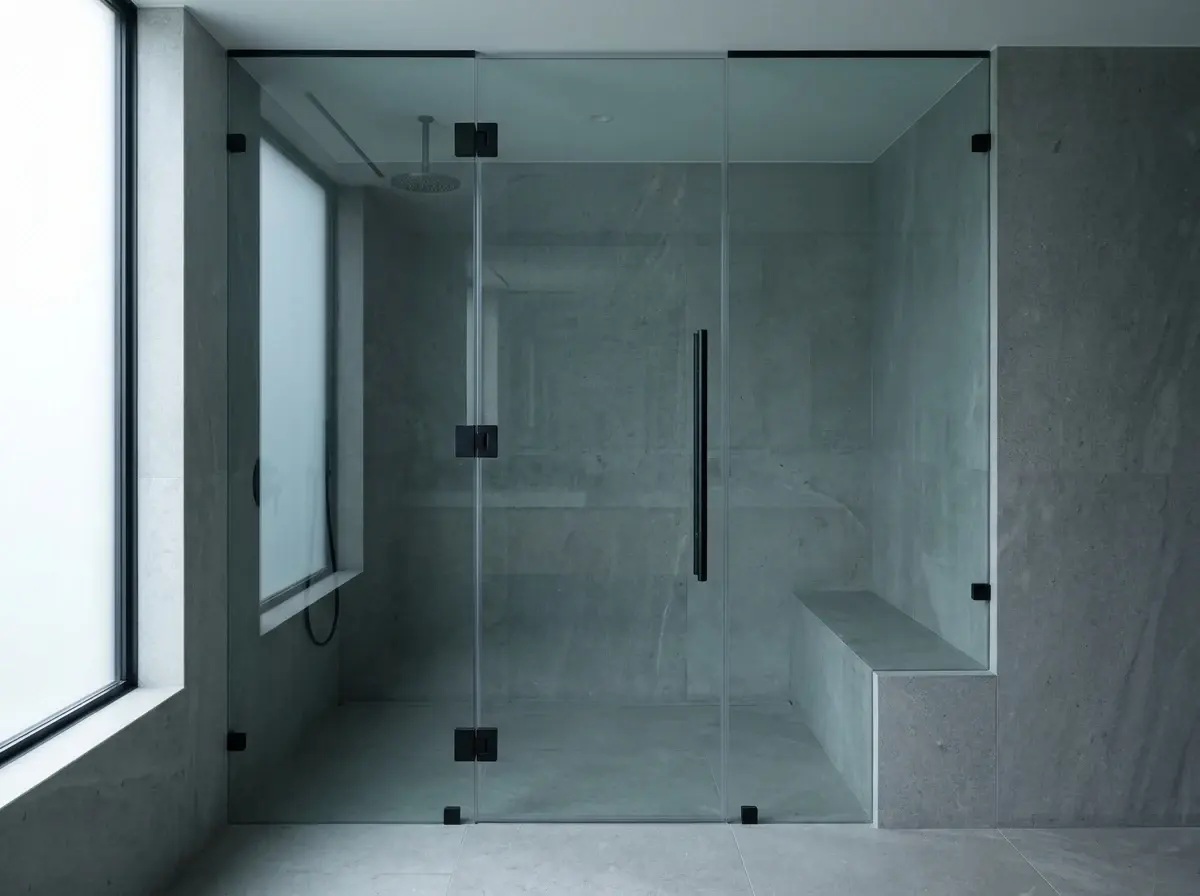
- White, gray, or marble-look tile. The green cast is most visible against neutral surfaces — exactly what 2026 bathrooms are made of.
- Thick lites. The tint scales with thickness; a 1/2-inch clear panel is noticeably green on edge.
- Design-led jobs. If a designer picked the tile, they will notice the cast. Quote low-iron first and let them decline it.
When standard clear is the honest answer
Colored or busy tile, rental units, budget-driven remodels, and textured glass (the pattern hides the cast). The upcharge typically runs 20-30 percent on the glass — real money on a big enclosure, and not every job benefits visibly.
The hardware note
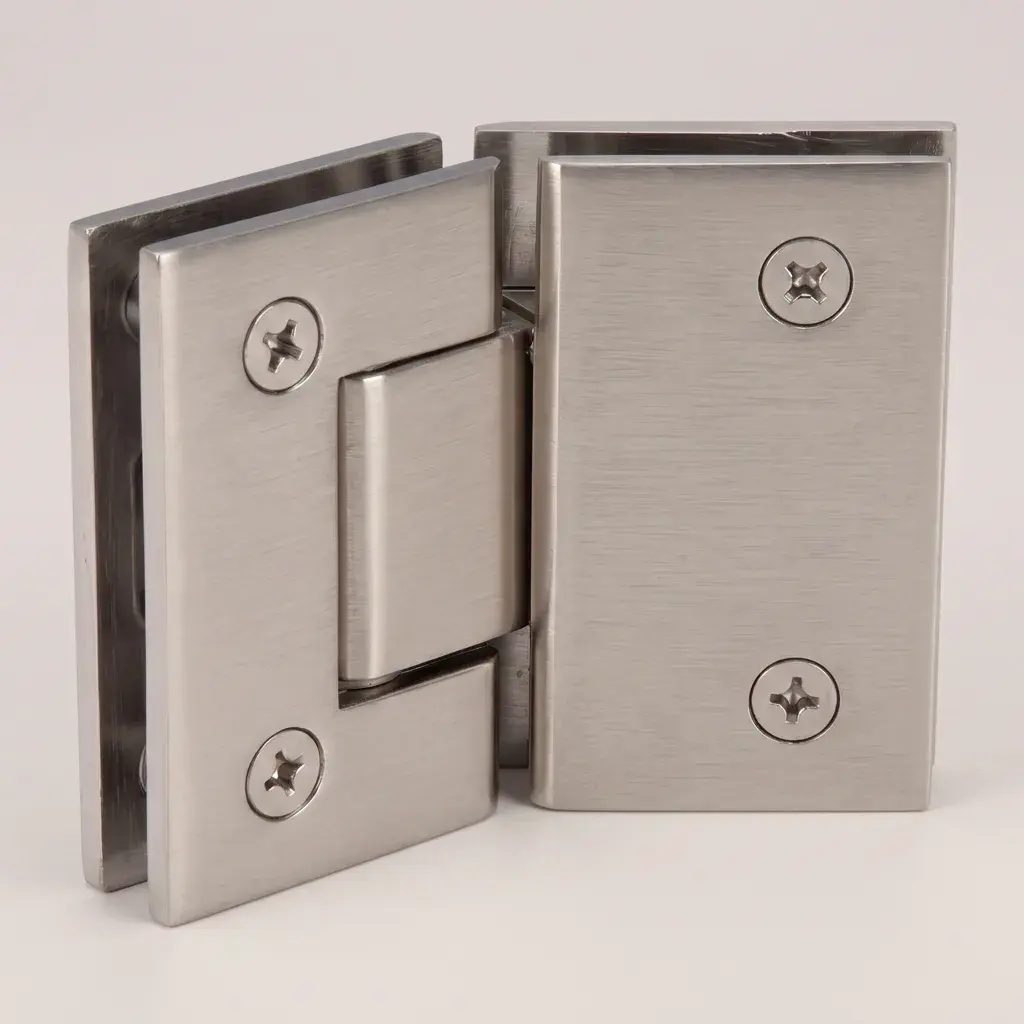
Finish choice interacts with glass choice. Warm metals like satin brass sit beautifully against low-iron's true-white transmission; on greener standard clear, cooler finishes like chrome and nickel are more forgiving. Either way, the hinge does not care — our hardware hangs 3/8 and 1/2 inch glass identically in both formulations.