
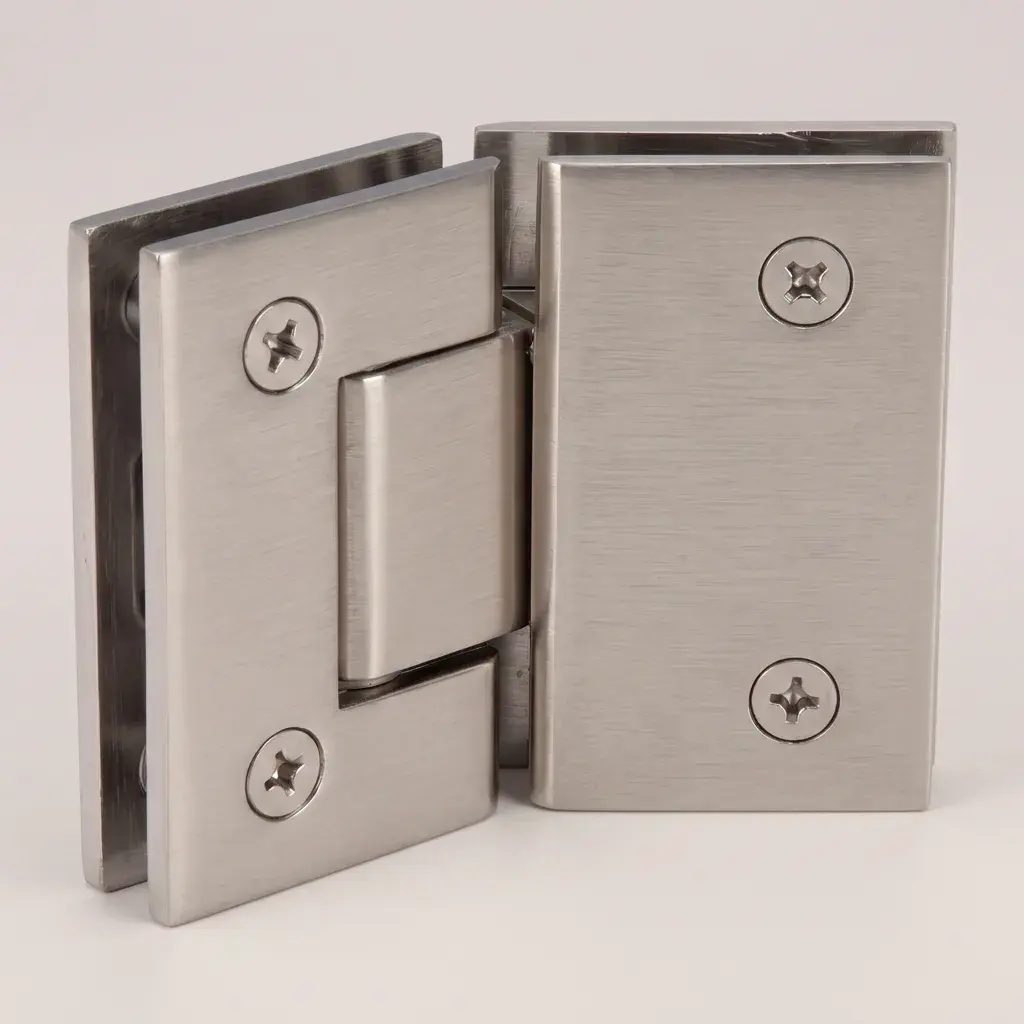


How to adjust frameless shower door hinges (and when the hinge is not the problem)
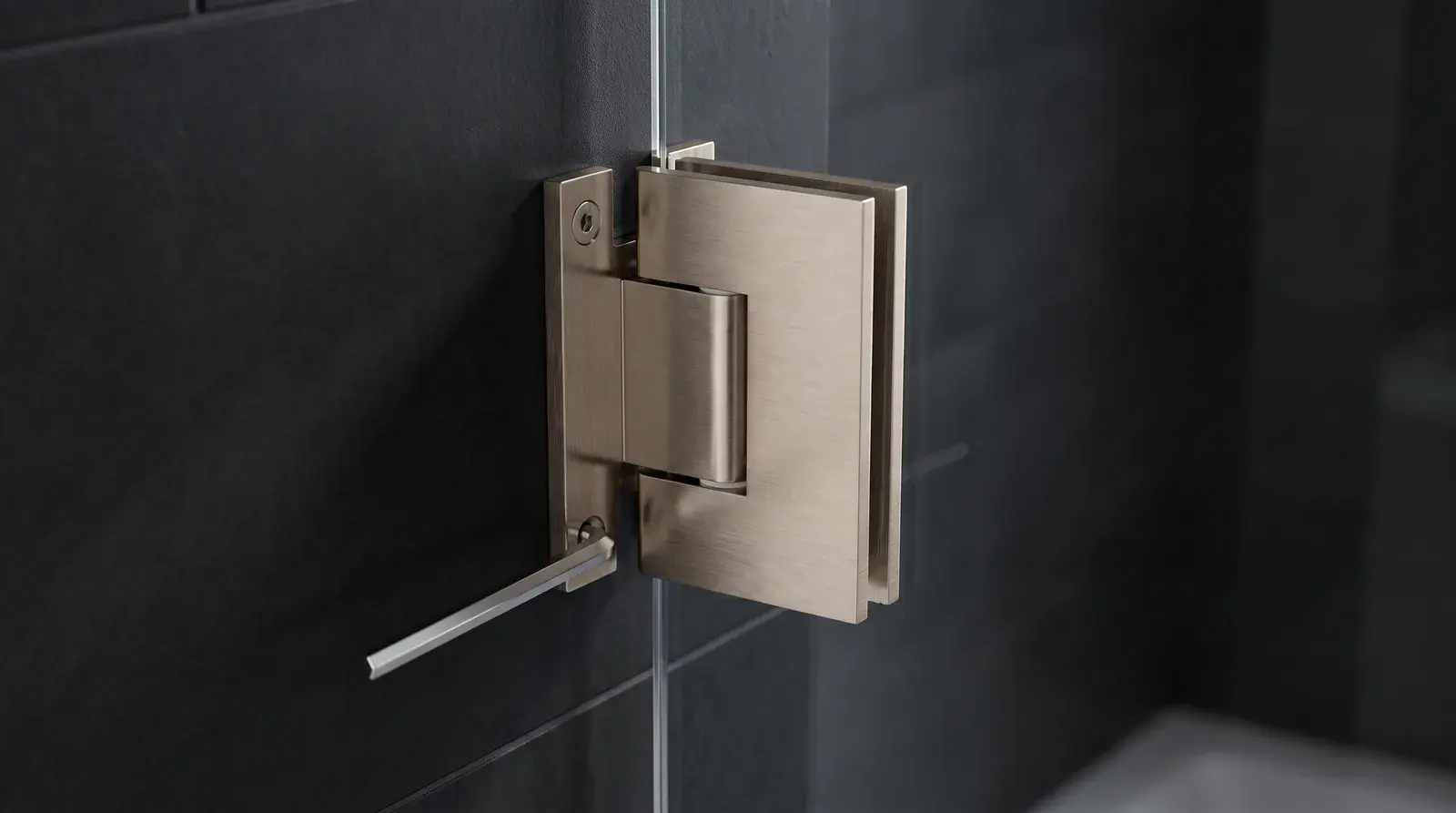
Most frameless shower door service calls are not hinge failures. They are a door that has crept a few degrees out of square, a sweep that has hardened, or a wall that was never plumb and is now showing it. The hinge gets blamed because it is the only moving part. This guide covers how to adjust shower door hinges properly, how to tell when the hinge is not the problem, and when replacement is the honest answer.
Read the symptom before touching a screw
Each complaint points to a different cause. Match the symptom first and you will avoid loosening plates that were never wrong.
- Door drifts open or closed on its own. Out-of-plumb hinge line, or a self-closing hinge whose return spring is set past the door weight.
- Door drags on the floor or curb. Glass has slipped down in the hinge, plates have loosened, or the wall anchors are pulling out.
- Gap at the strike side, top or bottom. Door is out of square, so the strike edge is no longer parallel to the panel or wall.
- Leaking on the hinge side. Worn or missing hinge-side seal, or a hinge gap that opened as the door rotated in its plates.
- Door will not self-close to center. Hold-open detent or return spring set wrong, or friction from a sweep that is too tight.
- Door binds on the strike or panel when closing. Glass has rotated in the hinge, or the fixed panel moved.
Safety before adjustment
A 3/8 in. tempered door of average size weighs roughly 80 to 100 lb, and tempered glass fails all at once when an edge is struck. Treat every adjustment as a two-person job. Use suction cups on the door, wear cut-resistant gloves and eye protection, and pad the curb and any tile edge the glass could touch. Never loosen both hinges at once without the door supported. If the glass has any chip or check at a hinge notch, stop. That door is a replacement, not an adjustment.
Tools
- Hex keys, metric and SAE, since hinge set screws vary by manufacturer
- Phillips and flat screwdrivers, plus a torque-limiting driver if you have one
- 4 ft level and a torpedo level
- Two suction cups rated for the door weight
- Plastic or wood shims and spare hinge gaskets
- Painter's tape to mark hinge position before loosening
- Silicone, a clean rag and isopropyl alcohol
Adjusting the return spring on self-closing hinges
Most glass shower door hinges with a self-close function use a spring cam that returns the door to zero from roughly 15 degrees or less, with a hold-open position around 90 degrees. Some models let you adjust the return angle or spring tension through a small set screw or a rotating cam under the cover plate. Others are fixed and can only be rebuilt or replaced.
- Remove the cover plate and locate the adjustment screw. Check the manufacturer sheet, because turning the wrong screw releases the glass clamp.
- Make quarter-turn changes and test the swing after each one. Both hinges should be matched, or the door will twist as it closes.
- If the door still will not return to center, the problem is friction or plumb, not spring tension. Do not keep adding tension. It shortens spring life and slams the door into the strike.
Re-squaring the door in the hinge
This is the core of adjusting frameless shower door hinges. Glass sits in the hinge between two gaskets and is held by clamp pressure, sometimes with a through-bolt. Over years of swinging, the glass can creep down and rotate a degree or two. Re-setting it fixes floor drag and strike gaps in one pass.
- Tape the hinge location on the glass and wall so you can see any movement.
- Close the door and measure the strike gap at top and bottom. Note which way the door needs to rotate.
- With a second person holding the door on suction cups, loosen the clamp screws on one hinge just enough for the glass to move. Leave the other hinge snug.
- Lift and rotate the glass until the strike gap is even and the bottom clearance is correct. Slide a shim under the door edge to hold it while you tighten.
- Snug the clamp screws evenly in a cross pattern. Do not overtighten. Crushed gaskets and cracked glass at the notch both come from too much torque.
- Repeat on the second hinge, then check the swing through the full arc.
Replace the hinge gaskets if they are flattened, glazed or torn. A hinge that will not hold the glass with fresh gaskets is worn and should come out.
When the hinge is not the problem
Wall plumb and anchor pull-out
Put a level on the wall along the hinge line. Anything past about 1/8 in. over the door height will drift a door and no hinge adjustment will hold it. Then check the anchors. Push the door toward the strike and watch the wall plate. Any movement, powder around the screw heads or a hinge that rocks means the anchor has lost its bite. Tile-only anchoring, a soft backer or missing blocking is common in older Miami bathrooms. The fix is longer screws into blocking, a proper anchor for the substrate, or an alternative hinge such as a wall-to-glass offset back hinge that moves the fasteners to fresh material.
Seals and sweeps
A hardened bottom sweep adds friction that a return spring cannot overcome, and a shrunken hinge-side seal looks like a hinge leak. Pull the sweep, clean the glass edge with alcohol and fit a new one from the PVC seals range before you blame the hardware.
Substrate movement
Cracked grout along the curb, a shower pan that flexes underfoot or a niche wall that has bowed will move a door. Adjust the hinge and it will drift again in a month. Refer that job back to the tile or waterproofing trade.
Troubleshooting summary
- Drifts open or closed: check wall plumb first, then spring tension.
- Drags on floor: re-set glass in hinge, then check anchors.
- Uneven strike gap: re-square the glass, then check the fixed panel.
- Leaks at hinge side: replace hinge-side seal, then check hinge gap.
- Will not return to center: replace sweep, then adjust return spring.
- Hinge rocks on wall: anchors or substrate, not the hinge.
- Glass slips after re-set: gaskets, then hinge replacement.
When to replace the hinge
Shower door hinge repair has limits. Replace when the spring no longer returns the door with fresh sweeps and a plumb wall, when the clamp will not hold with new gaskets, when the pivot pin has visible play, or when plating has failed and pitting has reached the bearing surfaces. Match the glass thickness, hinge type and offset. A wall-mount H-back square hinge and a standard 90 degree glass-to-glass hinge are not interchangeable, and a pivot hinge on a header carries load differently from a wall-mount unit. When a shower door hinges replacement is needed, do both hinges. Mixing an old spring with a new one produces the twist you were trying to remove.
Maintenance schedule
- Monthly: wipe hinges and sweeps with a mild cleaner. No acids or abrasives on plated hardware.
- Every 6 months: check hinge screw tightness and the strike gap. Snug only if loose.
- Yearly: inspect the sweep and seals, re-check wall plumb, and look for any glass movement against your tape marks.
- Every 2 to 3 years: replace sweeps and hinge-side seals as a set.
Singular Glass Hardware stocks replacement shower door hinges, seals, sweeps and other shower door hardware in Medley, so a Miami service call does not have to wait on a freight delivery. Bring the old hinge or a photo of the notch and we will match it.