
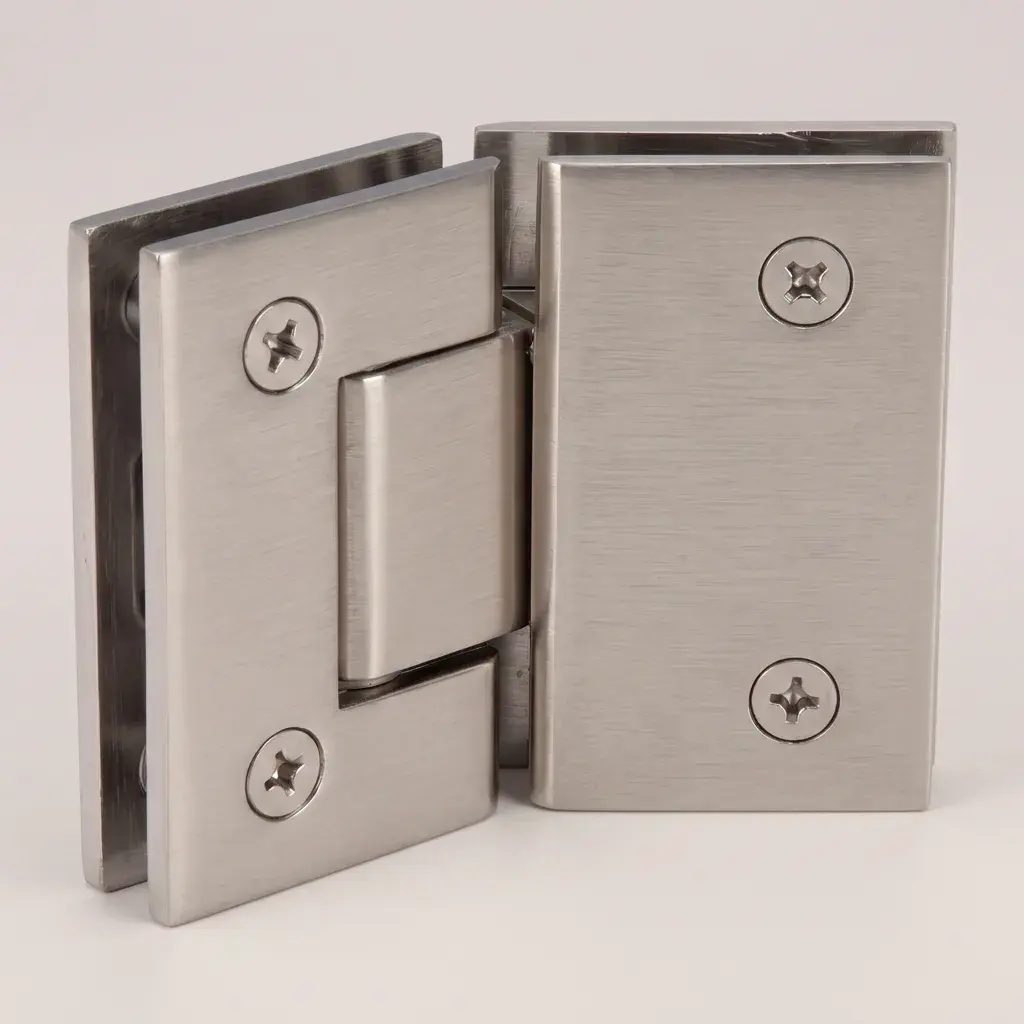


3/8 vs 1/2 shower glass: weight, hinge ratings and when heavy-duty is not optional
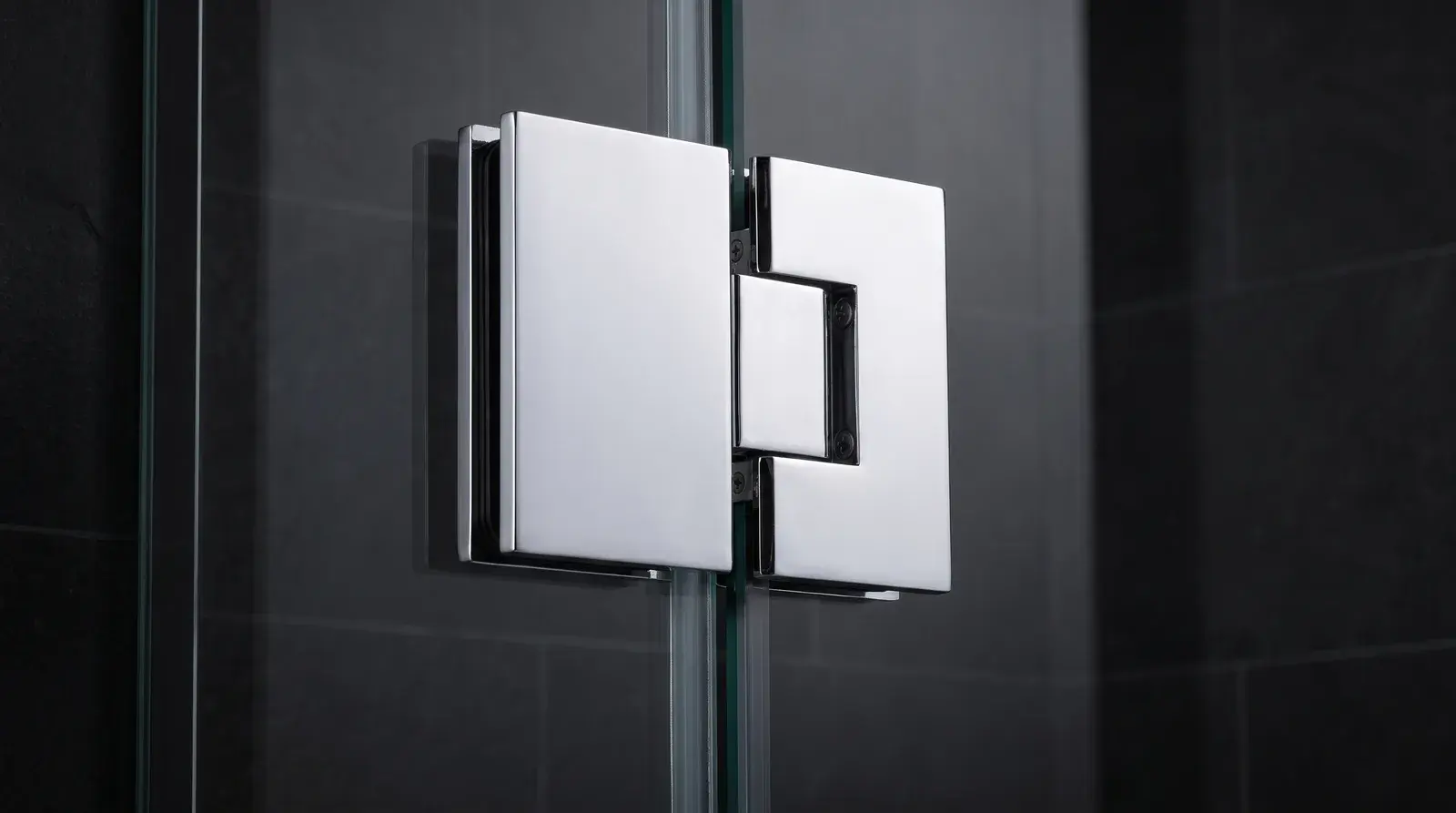
Every frameless shower quote hits a second fork right after the clear-or-low-iron question: 3/8" or 1/2" glass. The argument usually gets framed as feel and price. What actually decides the job is weight, and what that weight does to the hinges and the wall behind them.
The weight math
Tempered glass weighs the same as annealed glass of the same thickness. The numbers that matter for shower door glass thickness are roughly 4.9 lb per square foot for 3/8" and 6.5 lb per square foot for 1/2". That is a 33 percent jump for a 1/8" gain in thickness.
Run it on two common doors:
- 28" x 76" door (14.8 sq ft): about 72 lb in 3/8", about 96 lb in 1/2".
- 36" x 80" door (20 sq ft): about 98 lb in 3/8", about 130 lb in 1/2".
Those figures are glass only. Add the handle and the hinges and the load goes up a few more pounds. The door also does not hang as a dead weight. It swings, it gets pushed, and every cycle puts a prying moment on the top hinge. A 130 lb door on a wall that was fine for a 72 lb door is a different structure.
How hinge ratings are expressed
Hinge manufacturers publish a maximum door weight and a maximum door width, and the two are read together. The weight number is almost always per pair of hinges, not per hinge. A hinge listed at 80 lb is rated for an 80 lb door when two of them are installed, and the width limit still applies even if the door is under weight. A tall narrow door can be under the weight cap and still exceed the width limit, so check both lines.
Standard-duty wall-to-glass hinges are typically rated for 3/8" glass on doors in the 28" to 30" range. Heavy duty glass shower door hinges push both the weight and width ceilings up and are the correct hardware for 1/2" glass. Ratings vary by manufacturer and hinge geometry, so pull the sheet for the specific hinge rather than assuming a class rating.
Why 1/2" needs heavy-duty hinges and stronger anchoring
Three things change when you go to 1/2":
- Hinge clamp geometry. The glass pocket in the hinge is machined for a thickness range. Many standard hinges accept 3/8" to 1/2" with a gasket change, but their rating was set for the lighter door. Heavy duty shower door hinges have a larger body, longer pin and more clamp area, which is what resists sag over time.
- Anchor load. The top hinge is being pulled out of the wall. Tile, thinset and backer board hold almost nothing in tension, so the screws have to reach solid blocking.
- Fatigue. Running a hinge at 60 percent of its rating instead of 95 percent is the difference between a callback in year two and none at all.
The door-width thresholds installers use
There is no code table for this, but the field rules of thumb are consistent across shops:
- Up to about 30" wide: 3/8" glass with standard hinges is the default.
- 30" to 36": 3/8" is still fine on most alcoves, but many installers step up to heavy-duty hinges or add a third hinge on taller doors.
- 36" and up: heavy-duty hinges regardless of thickness. Above roughly 42", most shops want 1/2" glass, heavy-duty hinges and a header or pivot system rather than relying on wall hinges alone.
Height matters as much as width. Treat anything over 76" tall as one step up the ladder.
Blocking behind tile
Heavy-duty hinges cannot fix a wall that has nothing in it. For any frameless door, and without exception for 1/2" glass, there should be solid wood blocking (a 2x6 or 2x8 flat between studs) at hinge height before the backer board goes on. Take hinge elevations from the door drawing and photograph the blocking before tile. On a retrofit, find the studs; if a hinge lands between them, use tension-rated anchors or move the hinge. Anchoring into tile and cement board alone is where sagging doors come from.
When 3/8" is the right call
For most alcove showers, 3/8" tempered is the correct answer, not the budget answer. It is lighter on the wall, cheaper to fabricate and temper, easier to carry up stairs, and it works with a wider range of hinges and complete kits. On a 26" to 32" alcove door with a fixed panel, 1/2" adds weight and cost without adding anything the customer will notice once the door is hung.
When 1/2" wins
- Doors 42" and wider, where the stiffness of the thicker panel keeps the door from flexing and racking against the strike jamb.
- Tall walk-in panels over 84" that stand on a channel or clamps with one edge unsupported. Thicker glass deflects less in a large freestanding sheet.
- Large fixed panels on steam showers or wet-room layouts where a panel over 40" wide has no header.
- The substantial feel. Designers spec 1/2" because the edge reads heavier and the door closes with a different sound. That is a real preference, and it should be priced as one, heavier hardware included.
Low-iron availability by thickness
Both thicknesses come in low-iron, but 3/8" is the more common stock item at regional temperers and usually has the shorter lead time. 1/2" low-iron is available, but confirm lead time before quoting. The tint argument is covered in low-iron vs clear glass; the short version is that thicker glass shows more green at the edge, which is one more reason 1/2" projects tend to be low-iron.
Header and channel compatibility
Hardware is thickness-specific. U-channels come sized for 3/8" or 1/2" glass, and the wrong one either will not seat or leaves a gap the gasket cannot fill. Header clamp blocks, pivots and end caps are likewise specified by thickness. Glass-to-glass hinges for 1/2" panels, including 90 degree and 180 degree plug-in types, are cut-out dependent, so the fabricator needs the hardware called out before tempering. Same with back-plate hinges: the cut-out has to match the thickness on the drawing.
Cost pressure in 2026
Hardware prices have not settled. USGlass reports that builders' hardware and metal product prices stayed elevated through July 2026, with builders' hardware up 4.9 percent year over year and aluminum mill shapes up more than 40 percent. The Section 232 tariffs on steel and aluminum at 50 percent, in effect since June 2025, are the main driver. Practical result: the hinge and header line on a 1/2" job has moved more than the glass line. Quote with current numbers.
Decision checklist
- Door width under 36" and height under 76": 3/8" glass, standard or heavy-duty hinges depending on the hinge spec sheet.
- Door 36" to 42" or over 76" tall: 3/8" or 1/2", heavy-duty hinges, three hinges on tall doors.
- Door over 42" or fixed panel over 40" with no header: 1/2" glass, heavy-duty hinges or a pivot and header system.
- Compute the door weight (area in sq ft x 4.9 or 6.5) and compare it to the hinge rating per pair with margin.
- Confirm blocking at hinge height, or specify tension-rated anchors for a retrofit.
- Match channels, headers and clamps to the thickness before the glass is ordered.
- Confirm low-iron lead time for the thickness chosen.
Singular stocks standard and heavy-duty shower door hinges for both 3/8" and 1/2" glass at the Medley warehouse, including wall-mount and glass-to-glass hinges. Every hinge page carries the manufacturer spec sheet with weight and width ratings, so the numbers above can be checked against the hardware you are actually installing.