


Florida glass railing code, translated for the field
Singular Editorial · June 30, 2026
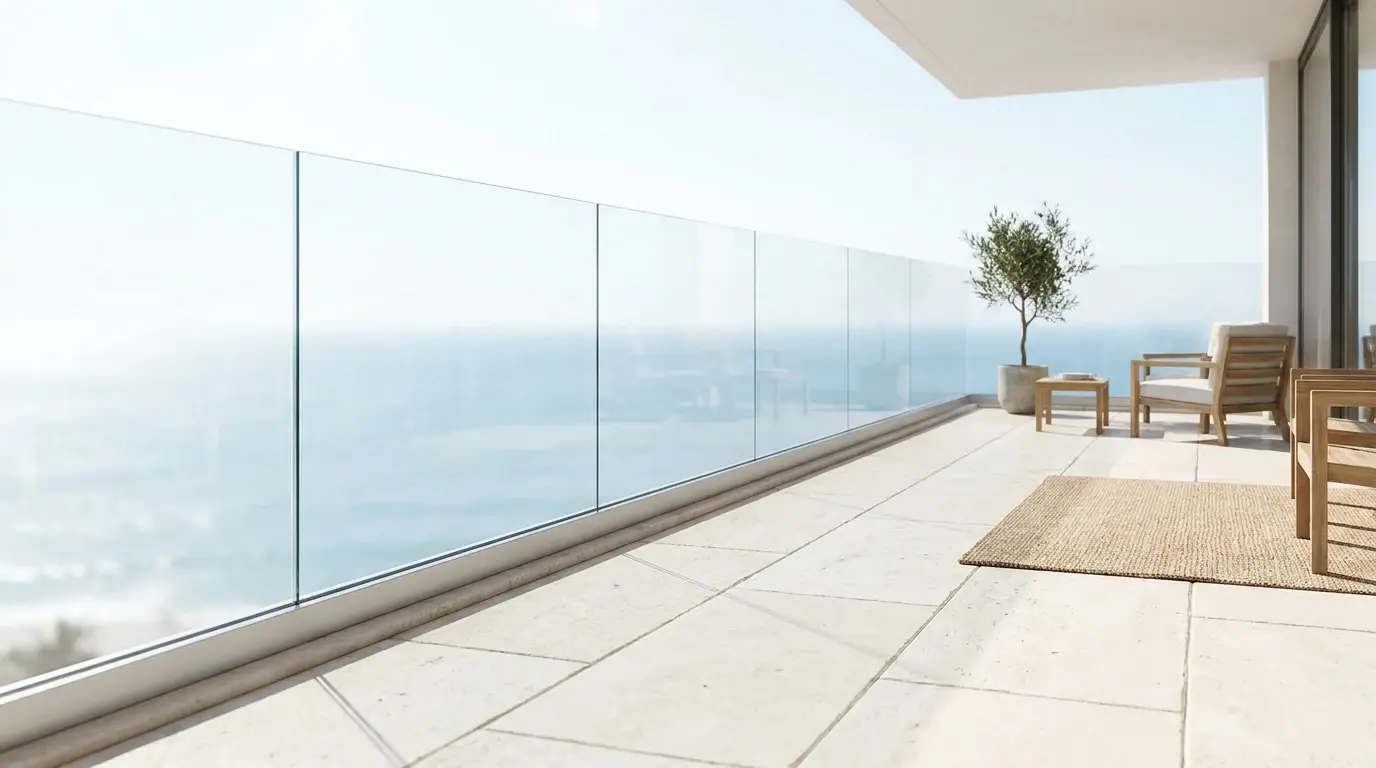
Glass railing rejections are almost never about the glass. They are about paperwork and details that were decided before anyone measured. Here is the Florida Building Code short list we check jobs against.
The checklist
- Glazing: laminated fully tempered or laminated heat-strengthened glass, conforming to Category II of CPSC 16 CFR 1201 (or Class A of ANSI Z97.1). Post-Surfside code cycles pushed hard toward laminated make-ups for guards.
- Thickness: minimum 1/2 inch (12 mm) for structural balustrade panels.
- Redundancy: a handrail or guard section needs support such that it stays in place if any single panel fails — the classic form is a minimum of three balusters per section, or an engineered top rail that spans a lost panel.
- Loads: guards take the standard 200 lb concentrated and 50 plf loading; your base shoe or spigot anchorage is where inspectors look first.
What actually fails inspection
Anchorage into questionable substrate, missing engineering for the specific make-up, and top-rail omissions on glass-baluster systems. If the drawing set names the glass make-up, the anchor spec, and the load path, the inspection is boring — which is the goal.
Our spigots, base shoes, standoffs, and cap rails are stocked in Miami with spec sheets you can drop into a permit set. When a detail is ambiguous, send us the drawing before you price it.